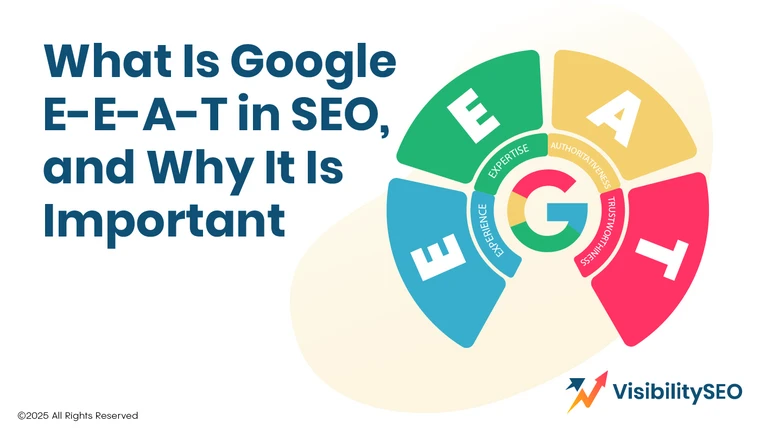
E-E-A-T stands for Experience, Expertise, Authoritativeness, and Trustworthiness. It’s part of Google’s Search Quality Evaluator Guidelines (SQEG). These guidelines help people who review Google results decide if the information is helpful and accurate.
Here’s the thing: E-E-A-T isn’t a ranking factor. Google doesn’t use it directly to rank websites. But, as an SEO agency, we at Visibility SEO know that following its principles can help. Why? Because it shows Google that your content is trustworthy and high-quality.
If you want your website to do well, focus on creating content that’s reliable, useful, and easy to understand. That’s what E-E-A-T is all about. And trust us—it makes a difference.
What Is Google E-E-A-T?
Google’s guidelines and blog updates explain why E-E-A-T matters. E-E-A-T stands for Experience, Expertise, Authoritativeness, and Trustworthiness. These four things help websites rank higher on search engines.
This article will break down each factor and show you how to use them in your content. If you want your website to show up more in searches, understanding E-E-A-T is a must. Let’s get started!
Experience
Show that you know what you’re talking about by proving your experience. Share stories, examples, or real-life results. This shows your advice is tested and practical.
Here are some simple ways to show expertise in E-E-A-T:
- Share personal stories: Make your content unique. Add your opinions and experiences. For example, if you’re an SEO expert, don’t just list facts. Write original content that reflects what you’ve done and learned.
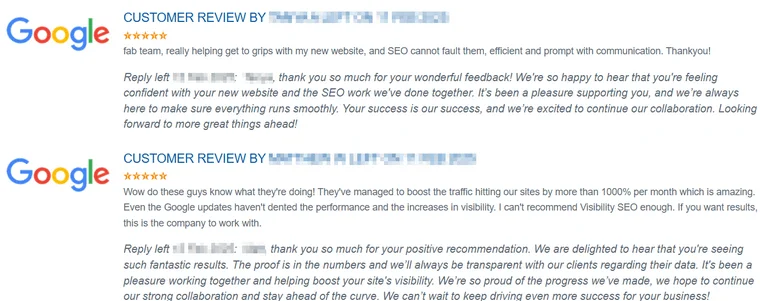
- Show case studies: Prove your methods work. For instance, we’ve helped clients grow organic traffic by 367% and boosted SEO scores by 60%. Real results speak louder than words.
- Explain your steps: Break it down. Don’t just give tips—explain why they work. If you’re giving advice on SEO, share the reasons behind your suggestions.
- Highlight lessons learned: Talk about successes and failures. Share how your process has changed over time. For example, explain how using ChatGPT prompts has improved how you work.
- Discuss industry changes: Show you’re up-to-date. Talk about new trends or shifts in your field and how they’ve impacted you. Explain what you’ve adjusted and why it matters.
- Share collaborations: Talk about working with others. For instance, we’ve noticed how updates like Helpful Content have affected creators, so we wrote this to help. Collaboration shows you’re active and engaged in your field.
Keep it real. People trust advice backed by real stories and results.
Expertise
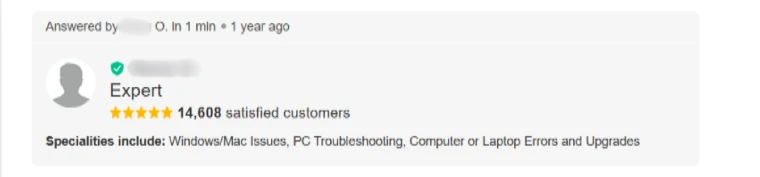
Showing expertise is not just about what you know but how you use that knowledge to help others. Expertise means having deep knowledge and skills in a specific subject.
Here’s how to show it in E-E-A-T:
- Start with a focus. What’s your niche? Pick a specific area you’re good at and stick with it. For us, as a content marketing platform, we’re all about things like social media content pillars or content calendar templates. BBQ reviews? Sure, they might rank well for SEO, but… that’s just not our lane.
- Share content hat actually helps people. High-quality, original, up-to-date content—stuff your audience can use. Case studies? Yes, absolutely. They’re gold when it comes to providing real value.
- Don’t stop at writing blog posts. That’s important, sure, but think bigger. Share your insights on LinkedIn, host a webinar, or maybe even set up a Q&A session. Why not create a space where your community can actually, you know, connect?
Authoritativeness
Website authority means being seen as credible and influential in your field. Search engines often measure this through backlinks from trusted sources.

To build authority, focus on the following strategies:
- Highlight affiliations: Show partnerships with official organizations or recognized experts. For example, share reviews from platforms like G2 or Capterra.
- Brand mentions: Google recognizes when your brand name appears on other websites, even without a link. Being listed as a top tool in your niche helps establish credibility.
- Guest posts: Write for popular blogs or websites in your industry to connect your brand with trusted platforms.
- Author bios: Include an about page, team page, or bios for guest writers with real credentials and social links. This signals that your site is run by real people.
- Publish original research: Create statistics or reports that others can reference and link to. This positions your site as a trusted source of information.
Trustworthiness
Trust is the core of Google’s E-E-A-T guidelines. Quality Raters evaluate the creator, content, and website to ensure honesty, accuracy, and ethical practices. Avoid misleading content, manipulation, or black-hat SEO techniques.
Here are key trust factors beyond your blog content:

- HTTPS: Websites without SSL certificates create security risks. For online stores, this can expose user passwords or credit card details to hackers. Always secure your site.
- Customer reviews: Reviews on your Google My Business Page or review sites show how customers feel about your products or services. Being listed in reputable directories helps build authority, but avoid links from untrustworthy sites.

- Contact details: Make it easy for users to reach you. Include a privacy policy, terms of service, phone number, or email address for support.
- Updated content: Keeping your content current shows search engines that you’re not an AI spam site but a credible source that values visitors.

- Social media links: Real businesses with real customers often have active social media accounts. Link these accounts on your website to confirm legitimacy.
- User experience: Avoid cluttered designs or excessive ads. A clean, user-friendly site signals to search engines that your content is created for users, not just for ad revenue.
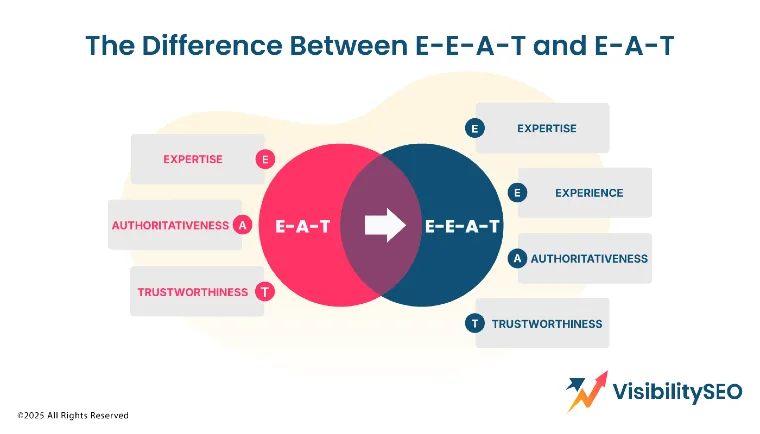
The Difference Between E-E-A-T and E-A-T
In December 2022, Google updated E-A-T to E-E-A-T. The extra “E” stands for “Experience.” This change helps Quality Raters better assess search result quality, emphasizing the importance of first-hand knowledge of content. For instance, product reviews are more reliable when the reviewer has personally used the item.
Evaluating E-E-A-T
E-E-A-T is important for evaluating the quality and credibility of online content. Google’s Quality Rater Guidelines outline how quality raters assess search results. These guidelines ensure that Google Search delivers accurate and trustworthy content. Content creators who follow these principles can improve their chances of ranking higher in search results.
Quality Rater E-E-A-T Guidelines
Google’s Quality Rater Guidelines help evaluators assess the quality of search results. These guidelines focus on E-E-A-T: experience, expertise, authoritativeness, and trustworthiness. Evaluators check if the content creator is knowledgeable, if the information is accurate, and if the content is clear and helpful for users.
Search Quality Rater Guidelines
The Search Quality Rater Guidelines are all about making search results better. Relevance, accuracy, trustworthiness—those are the big ones. But here’s the thing: it’s not perfect. They push this idea called E-E-A-T (experience, expertise, authoritativeness, trustworthiness). Sounds fancy, right? In the end, it’s a nudge to content creators: “Show your stuff. Build trust.” It’s a work in progress, but isn’t everything?

Demonstrating E-E-A-T
Showing E-E-A-T is key to building trust with users and search engines. Here are some ways to show E-E-A-T:
Create High-Quality Content
Creating high-quality content is key to showing expertise, authority, and trustworthiness (E-E-A-T). Good content is well-researched, informative, and engaging. It provides value to users and positions the creator as a reliable source. To achieve this, focus on the following steps:
- Research your topic thoroughly and use accurate, up-to-date information from trustworthy sources. Provide evidence to support your claims.
- Regularly update your content to reflect new information and developments in your field.
- Write in clear, simple language. Avoid jargon or sentences that are too complicated.
- Use appealing headlines and organize your content with headings, bullet points, and images to make it easy to read.
- Ensure accessibility for all users, including those with disabilities. Add alt text to images, offer transcripts for videos, and make sure your site works well on mobile devices.
High-quality content helps establish your credibility and builds trust with your audience. It can also improve your search engine rankings and encourage readers to return and engage with your content.

E-E-A-T in the AI Environment and AI-Generated Content
The internet is changing quickly with the rise of artificial intelligence (AI) tools like Google Bard, Google SGE, ChatGPT, OpenAI, and the new Bing. These tools can create large amounts of content instantly, which raises questions about how they align with E-E-A-T principles. Let’s break it down:
Google is in a difficult position. For years, it has encouraged human-created content driven by expertise, experience, and trust. Now, Google is leaning into the AI race, promoting tools that allow automated content generation. This creates tension between human-driven content and automation. Here’s where Google stands on AI content:
- Google permits AI use as long as it doesn’t manipulate search rankings.
- Google acknowledges automation has been used in publishing for years and calls AI an exciting tool for creating useful content.
- Google claims it can demote low-quality or inaccurate AI content and promote high-quality results. Many SEOs question Google’s ability to consistently do this.
- Publishers are not required to disclose AI-generated content but are encouraged to do so when helpful.
- Google states that high-quality content will be rewarded, regardless of how it’s created.
While Google appears open to AI content, publishers should proceed cautiously. As the creator of Bard and SGE, Google has a vested interest in AI and could change its policies in the future to penalize certain practices.
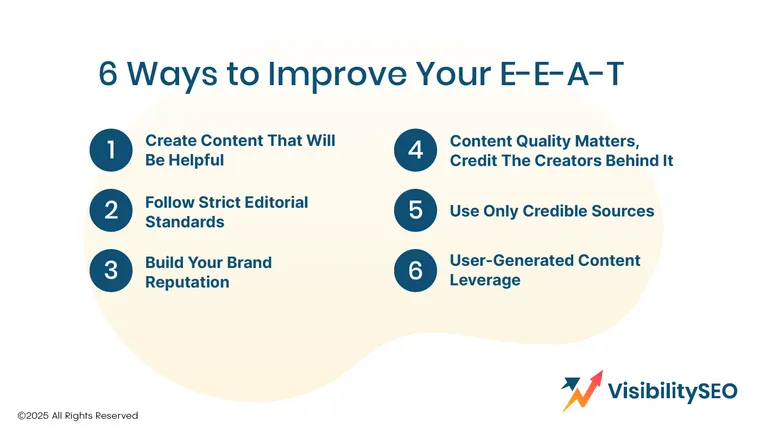
6 Ways to Improve Your E-E-A-T
Now that you understand what E-A-T is, here are some tips to improve it on your website.
1. Create Content That Will Be Helpful
Creating useful, high-quality content is essential for driving organic traffic in digital marketing. The E-E-A-T framework heavily relies on pieces of content that provide real value to the audience. Off-page SEO can build authority, expertise, and experience by delivering targeted, engaging type of content that meets audience needs.
2. Follow Strict Editorial Standards
Strict editorial standards make your content reliable and professional. Fact-check information to ensure accuracy, use simple and clear language for easy reading, and avoid grammar mistakes and typos to show quality and care. Organize your content with proper headings and formatting. Consistent editing builds trust with your audience.
3. Build Your Brand Reputation

Building a good reputation for your brand is important. Offer consistent value through quality products or services, respond to customer feedback, and address their concerns promptly. Be open and honest to earn trust and loyalty. A strong reputation attracts more customers and builds lasting relationships. Ensure your actions and communication reflect your brand’s core values.
- Digital PR: It’s not always easy to get noticed, is it? Digital PR helps create buzz by building meaningful connections with media outlets. Sure, it takes time, but the impact? Worth it.
- Influencer Marketing: Word of mouth is powerful. Partnering with influencers brings authenticity to your brand. It’s not a perfect science, but when it works, it’s magic.
- Guest Posting: Writing for others? It’s a mix of effort and opportunity. You don’t control the space, but you gain exposure. It’s about building trust, one post at a time.
- Social Media Management: Keeping up with trends can feel overwhelming, right? But showing up consistently builds relationships. It’s not about perfection; it’s about connection.
- Link Building: Getting links isn’t glamorous. Sometimes, it’s awkward pitching, sometimes, it’s rejection. But those links? They’re crucial for growth. Patience pays off.
4. Content Quality Matters, Credit the Creators Behind It
Creating detailed author, about, or review credibility pages on your site can help build trust. Include news about you or your company, as well as awards or recognition you’ve received, and explain how you ensure content accuracy. This not only helps users trust your content but also helps Google Search Quality Raters assess your authority.
5. Use Only Credible Sources
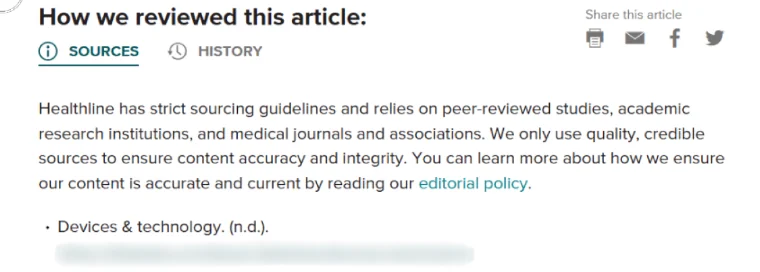
Credible sources are key to meeting the ‘Authoritativeness’ and ‘Trustworthiness’ requirements of the E-E-A-T framework.
Google values websites that use structured data from reliable, high-quality sources, especially trusted leaders in a specific niche.
Using credible sources also strengthens the ‘Expertise’ and ‘Experience’ aspects of E-E-A-T, as it highlights the author’s knowledge of the industry.
Sources don’t always have to be external. Internal links to valuable content on your site can also provide helpful information to readers.
6. User-Generated Content Leverage

All digital content is meant to be social. If you’re not writing for people, what’s the purpose? That’s why user-generated content matters. It also supports the A and T in E-E-A-T.
When your website includes content from users in your target audience, it builds trust. People don’t want to be sold to by a company, but they trust experiences shared by others who have used your product or service. User-generated content can include text, photos, videos, reviews, feedback, or comments created by your users. It’s simple to gather and highly effective.
Why Is E-E-A-T Important for SEO?
E-E-A-T is important for SEO because it helps you create high-quality content that ranks well on Google and appeals to users. It is not a direct ranking factor in Google’s algorithm. However, improving your E-E-A-T aligns your content with Google’s standards for a good search result.
- Content quality and ranking signals: Quality isn’t just about great writing—it’s about value. Does your content answer questions? Engage readers? If not, no fancy SEO trick will save it.
- Impact on search visibility: Ever wondered why some pages just rank better? It’s not magic. Search engines reward relevance and engagement. Flawed content? It’ll sink faster than you think.
- User trust and engagement: Trust takes time to build but seconds to lose. Are readers sticking around or bouncing? Honest, relatable content keeps them engaged. Perfect isn’t always authentic.
- Google’s Quality Rater Guidelines: These aren’t just rules; they’re reflections of what users want. Authenticity, expertise—Google demands it. So, shortcut tactics? Yeah, they won’t cut it anymore.

Start Building Your E-E-A-T
You know, improving E-E-A-T isn’t about being perfect—it’s about being intentional. Sure, it’s not a direct ranking factor, but doesn’t aligning with Google’s standards just make sense? Especially for “YMYL (Your Money or Your Life)” content, where trust is everything.
At Visibility SEO, we get it. We help businesses build content that feels real, credible, and exactly what users and Google want. Stuck on where to start? Don’t sweat it; even small steps can make a big impact. What’s holding you back?
FAQs
Why does Google value first-hand experience?
Google prioritizes first-hand experience because it shows credibility and trust. It means the author has personally interacted with the topic, offering authentic insights instead of generic information from other sources.
Are E-E-A-T factors Google search ranking factors?
E-E-A-T isn’t a direct ranking factor, but it helps identify content that meets high-quality standards.
What does the helpful content update have to do with E-E-A-T?
Google’s “helpful content update” is closely connected to E-E-A-T. It emphasizes that content should focus on providing value to users while showcasing experience, expertise, and trustworthiness. Google now favors content created by knowledgeable and credible authors, aligning with E-E-A-T’s core principles.
What is an example of E-E-A-T Google?
Examples of E-E-A-T in Google:
- Restaurant reviews: Reviews written by people who have actually eaten at the restaurant show E-E-A-T.
- Product reviews: Reviews with firsthand details, like photos or videos, reflect E-E-A-T.
- Guides: Guides that explain why their recommendations can be trusted demonstrate E-E-A-T.
- Tax information: Content from experts, such as accountants, shows strong E-E-A-T.
- Business reviews: Reviews from individuals who have personally interacted with a business highlight E-E-A-T.

- SEO Consultant vs SEO Agency – What is the Difference? - June 25, 2026
- FAQ Schema: A Simple SEO Trick for Better Visibility - December 20, 2025
- What Is YMYL and Why It Matters for SEO? - December 16, 2025