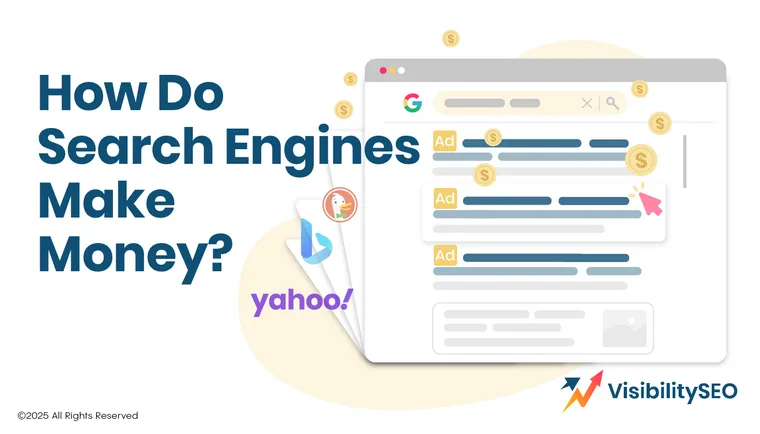
Big companies like Google make billions every year. But have you ever wondered how search engines actually make money? They’re free to use, and they don’t sell products. So, where does all that cash come from?
At Visibility SEO, we break this down all the time. Most of their money comes from ads. Businesses pay search engines to show their ads when people search for certain words. It’s called online advertising, and it’s a huge business.
In this article, we’ll explain how it works. We’ll also look at the good and bad sides of online ads for businesses and show you how top search engines make most of their income. Let’s dive in.
What Are Search Engines and How Do They Work?
Below, we’re exploring the different search engines people use instead of Google. We’ll explain what makes them good, who prefers them, and where they fall short. It’s important to know the options out there, and we’re here to break it down for you.

One of Google’s key features is its Generative AI tool. This tool answers questions, summarizes information, and shows source links right at the top of search results. While it’s useful, it pushes ads and regular search results lower on the page. This can make things harder for marketers and SEO experts.
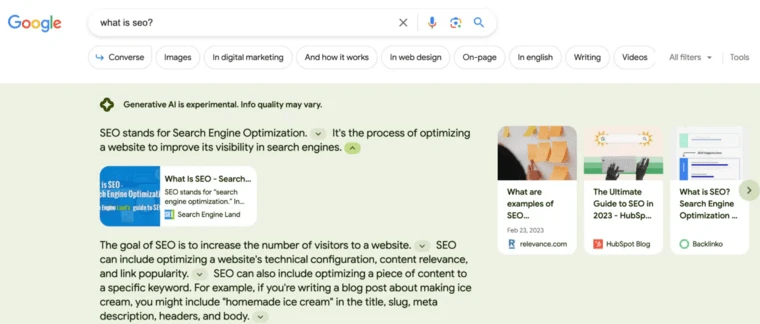
Google is the main platform for both organic and paid marketing because it reaches so many people. Its search features are designed to help users find answers fast without leaving the page.
But ranking high on Google is tough. There are billions of pages, and popular keywords mean heavy competition. On top of that, Google has been slow to adopt stronger privacy protections, which might affect how much users trust it, especially in industries like SaaS.
Most Google users are between 18 and 44 years old.

Yahoo
Yahoo used to be a big name in search engines. But in 1998, it passed on the chance to buy Google for $1 million. A few years later, Google became the top search engine, leaving Yahoo! behind.
Now, Yahoo! is more of a web portal. It combines search with email, news, entertainment, and other content. Its search tool is powered by Microsoft Bing, but Yahoo! tweaks the results to fit its own system. The image search is okay, but it’s not the best out there. Unlike Google or Bing, Yahoo! has fewer features right on the search page. It relies more on links in the results.
For marketers, Yahoo! isn’t a major platform. Its market share has been small for years. While tracking its trends might show some opportunities, it doesn’t compare to the advancements Google and Bing are making in AI.
Yahoo! is most popular with people aged 65 and older. It was at its peak over a decade ago and hasn’t regained its former success.

Bing
Microsoft is one of the biggest companies in the world, but its search engine, Bing, has always been less popular than Google. When Steve Ballmer launched Bing in 2009, Microsoft hoped to grab more users by including it on most PCs.
Even though Bing is still only a small part of the search market, it’s used in many places besides its main site. Bing powers web searches in:
- Microsoft Cortana
- Microsoft Edge
- Microsoft Office apps like Outlook, Word, Excel, and Teams
- Skype
- Xbox
- Amazon Alexa
- Search engines like Yahoo!, AOL, DuckDuckGo, and Ecosia
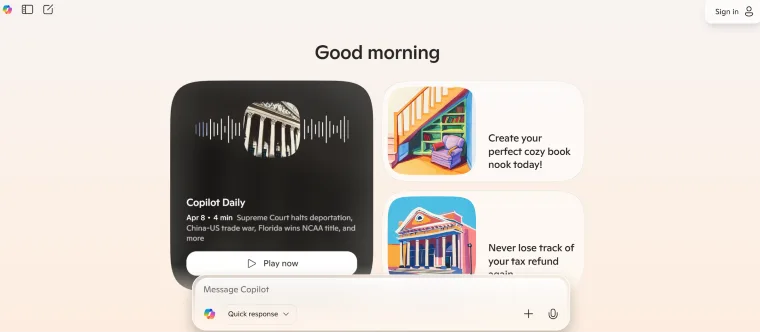
Bing also has cool features. Its AI Chat tool, found in Microsoft Edge, gives conversational answers and personalized results. Bing’s image search offers sharp visuals and advanced filters, even better than Google in some cases. You can also play full videos right on the search page, saving time. Plus, Bing works seamlessly with other Microsoft products, which can boost productivity.
Still, Bing has obstacles. Most people stick with Google because they’re used to it. Changing habits is hard. If Bing wants to compete, it needs to focus on features like privacy and AI.
Interestingly, Bing is especially popular with people aged 45 to 64.

DuckDuckGo
DuckDuckGo is a search engine that focuses on keeping your information private. Its founder, Gabriel Weinberg, cared about privacy long before it became popular. Unlike other search engines, DuckDuckGo doesn’t track your searches, use third-party cookies, or show ads based on your data.
It also offers browser extensions to boost privacy. These tools can block cookies, protect your email, and keep your searches private, even if you’re using Google.
While DuckDuckGo is one of the most private search engines, it has some downsides. Since it doesn’t collect your data, search results aren’t personalized. This makes it less useful for things like local searches, news, or personalized topics.
DuckDuckGo is most popular with people aged 25 to 34. It’s a great pick for anyone who values privacy over personalization.
The Profit Model of Search Engines
How do search engines make money? It’s all about ads. Platforms like Google Ads bring in billions every year. When you search for something, search engines show results along with ads at the top or bottom of the page. These ads are marked as “sponsored” or “ad.” Advertisers only pay when someone clicks on them. This is called Pay-Per-Click (PPC).
Search engines also track what you do online to make ads more personal. They collect data like your search history, location, and what device you’re using. This helps them show ads that match your interests. For example, if you search for recipes, you might see ads for food products or local restaurants.
Advertisers use this data to make smarter ad campaigns. They can run ads for specific locations, times of day, or even certain devices. At Visibility SEO, we help businesses understand these strategies so they can reach the right audience faster. It’s all about using data to get better results.
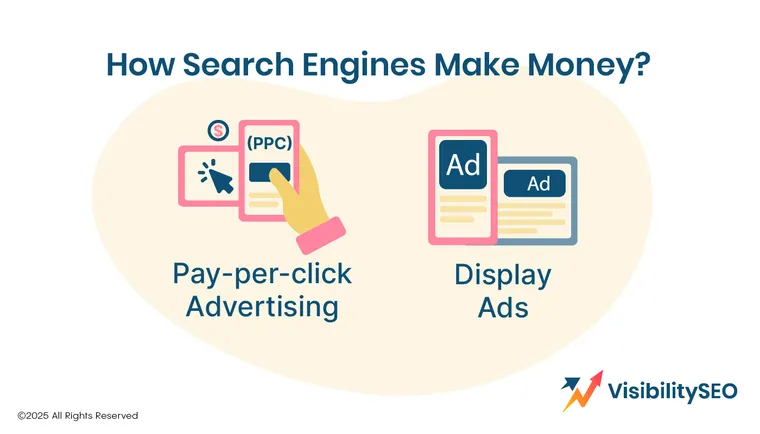
How Search Engines Make Money?
Search engines make most of their money from ads. They run PPC (pay-per-click) campaigns and track what users search for to show them products they might like. Their income comes from selling ad space or promoting services for companies. Why does this work so well? There are three main reasons.
Can Take Advantage of Commercial Intent
When people use Google, they’re often searching for a product or service. Big companies are willing to pay huge amounts of money, sometimes hundreds of thousands of pounds a year to show up first in search results. This is a big money-maker for Google.
Google Ads works like an auction. Businesses bid to show their ads when people search for specific words, known as keywords. There are millions of keywords and combinations, and even unusual ones can make money. Google sells ad space for all of them.
With so many keywords and so much ad space to sell, search engines like Google can earn almost unlimited money.
Pay-per-click Advertising (PPC) model
PPC, or pay-per-click, is a popular way to advertise on search engines. Businesses pay to show their ads when people search for certain keywords. They are charged every time someone clicks on their ad. It’s a fast way to get noticed, but it can get expensive quickly.
Display Ads
Search engines collect a lot of data about what people search for. They use this information to show ads that match your interests. For example, if you look up “cooking classes,” you might start seeing ads for online cooking lessons. This can be helpful, but it also raises concerns about privacy. While the goal is to show ads you’ll click on, it’s also how search engines make money.
How Browsers Make Money?
Get Part of the Ad Revenue from Search Engines
Browsers make money from search engines. When you search using the browser’s default search engine, the browser gets a share of the money made from ads or sponsored links. This is one of the main ways browsers stay free for users.

The Browser’s Extension Marketplace is a Source of Revenue
Web browsers can make money from their extension stores. Developers often pay browsers to feature their extensions, so more people see them. Some popular extensions even share part of their earnings with the browsers. This setup helps browsers earn extra cash while giving users helpful tools to improve their online experience.
Promote and Sell Products Indirectly
Browsers make money by promoting products. They team up with companies to show ads or suggest items while you search or browse. Sometimes, you’ll see shopping tips or sponsored links pop up. It’s a quiet way for them to earn money without interrupting your experience.

Collecting Data Based on Your Activities in the Browser
Web browsers collect data about what you do online. This includes your searches, the websites you visit, and how long you stay on pages. Companies use this information to show you ads, improve their services, or create new features. While it can make your experience better, it also creates privacy risks. To stay in control, check your browser’s privacy settings and decide what you want to share.

How Google Search Works
Search engines like Google don’t tell us exactly how they work. But we’ve learned a lot from developers and research. It all comes down to three main steps: crawling, indexing, and ranking. Here’s how we see it: search engines first find pages (crawling), then store and organize them (indexing), and finally decide which pages show up first (ranking). Simple, right? Understanding these steps helps us do what we do best—helping your site get noticed.
Crawling
Crawling is how search engines start their job. Crawlers are automated tools that search the internet for content. They begin with one page and follow links to find new ones. This process runs all the time, gathering information from billions of pages. It collects things like text, images, videos, and metadata to understand what’s on each page.
Indexing
After search engines crawl web pages, they organize the information through a process called indexing. This means they store the data in huge databases called indexes. These indexes are designed to work fast, helping search engines quickly find what you need when you type in a search. The information is sorted to make it easy to access, like a library catalog or a giant digital archive of everything crawlers have discovered online.
Ranking
The final step in a search is ranking. The search engine checks its list of websites to find the best matches for what you’re looking for. It uses special rules, called algorithms, to decide which pages are most useful and trustworthy. Things like keywords, how easy the site is to use, how fast it loads, the quality of the content, and links from other websites all play a part. The goal is simple: show you the most helpful and accurate information at the top of your search results.

Search Engine Content Ranking Factors
No one knows exactly how search engines decide the order of results. But some things do affect how web pages show up on Google and other search engines.
Content Quality
Search engines rank content based on how helpful, clear, and valuable it is to readers. They check things like how new the content is and if it fully answers the question someone asked. They also look at how people interact with it. For example, if someone spends a lot of time on a page or clicks around instead of leaving right away, that’s a good sign.
We’ve seen this firsthand with SEO work. Once, we updated an old blog post to answer common questions more clearly. It started getting way more views and stayed at the top of search results for weeks. Simple changes can make a big difference!

User Experience
A good search experience helps websites rank higher on Google. It means pages should load quickly, work well on phones, and be easy to navigate. Search engines check these things using numbers like how fast the page opens or how well it works on mobile.
For example, at Visibility SEO, we improved a client’s website by speeding up their load time by 3 seconds. Their rankings jumped within weeks. That’s how much these small changes matter!
SEO Optimization
If your website has great content and is easy to use, that’s a good start, but it still needs SEO. SEO helps search engines find your site and show it to the right people. To do this, you need to create content that uses important keywords for your business. You should also update your site regularly, make landing pages better, and build strong backlinks to improve how search engines trust your site.
We worked with a small bakery that had great photos and a nice website, but no one could find it online. We helped them add keywords like “best cupcakes near me” and “custom wedding cakes.” We also cleaned up their landing pages and got links from local blogs. Within months, their website visits doubled, and so did their sales. That’s the power of SEO.
Adverts
Adverts can be tricky, right? They’re everywhere, but do they really help with search rankings? Well, kind of. Ads don’t directly impact SEO, but they can drive clicks, build awareness, and guess what, more website traffic. And isn’t traffic a big deal for rankings? It’s a bit of a loop, really. Your ads boost visibility, traffic grows, and your content gets noticed by search engines. Worth thinking about, isn’t it?

Knowing How Search Engines Work Can Help You Create Better Content
If you want people to find your website, you need to understand how search engines work. I’ve learned that focusing on simple things can make a big difference. Create content that’s helpful and matches what people are searching for. Build links from trusted websites to show your site is valuable. Make sure your site loads fast and works well on phones. Search engines want to give users the best answers, and when we follow these rules, our sites get noticed more. It’s all about doing the basics right and staying consistent!
FAQs
How do search engines differ from browsers?
A browser is a program that lets you visit and look at websites. A search engine is a tool you use to find other websites and information online.
What is the world’s greatest search engine?
Google is the king of search engines, controlling 92% of the market. Everyone working in SEO wants to figure out how Google decides which websites rank the highest.
How do search engines such as Google and Bing generate revenue from their services?
Search engines make most of their money from ads, especially pay-per-click (PPC) ads. But how do private search engines earn money without tracking you? They use affiliate links, show ads based on what you search, or rely on donations from users. When you search for something online, the results you see can include both unpaid (organic) content and paid ads.
How does Google come up with search results?
Search algorithms look at many things. They check the words you use, how helpful and easy the pages are to use, the knowledge of the sources, and even your location and settings.
What is Brave Search, and is it safe to use?
Brave is a free browser that keeps your privacy safe. It was created in 2016 by the people behind JavaScript and Firefox. Brave blocks ads, making it faster to use. It also gives you more control over your online privacy. Simple, fast, and secure.

- SEO Consultant vs SEO Agency – What is the Difference? - June 25, 2026
- FAQ Schema: A Simple SEO Trick for Better Visibility - December 20, 2025
- What Is YMYL and Why It Matters for SEO? - December 16, 2025