Pay-per-click (PPC) advertising can be a powerful way to bring more customers to your business. But without a clear plan, your money can disappear fast. That’s why setting the right PPC budget is so important. Whether you’re new or experienced with PPC campaigns, knowing how to calculate and manage your budget effectively will help you reach your marketing goals while saving money and improving your return on ad spend.
What Is PPC Budget?
A PPC budget is the amount of money you plan to spend on pay-per-click advertising. It can be your total budget, monthly budget, or daily budget. This budget is used for running PPC ads on platforms like Google Ads, Bing Ads, or other search engines. When someone clicks your ad, you pay a cost per click (CPC). That’s why having a clear plan for your PPC budget helps control ad spend and avoid wasted budget.
Your PPC budget also shapes how much reach and visibility your campaigns get. If your ad budget is too low, your ads might not show up as often, which means fewer clicks and conversions. On the other hand, if you spend too much without knowing your average CPC or your website conversion rate, you might lose money. That’s why understanding your budget inside and out is key to campaign success.
The Importance of Setting a PPC Budget
Setting a PPC budget helps you stay on track with your business goals. Without it, you could spend too much without getting enough results. A strong PPC campaign budgeting plan guides your ad placement and makes sure your advertising budget matches your marketing objectives. Plus, it helps you track key metrics like conversion rate and average CPC to optimize PPC spend. It’s not just about spending; it’s about spending smart.
A good budget also helps you manage your advertising efforts across multiple campaigns. You can plan where to focus, like branded keywords or bottom-funnel ads, and shift budget as needed. Budget management gives you control over your return on ad spend. It also helps avoid surprise costs and supports better planning around business goals. When your budget is well set, every dollar has a purpose.
Determining Your PPC Budget
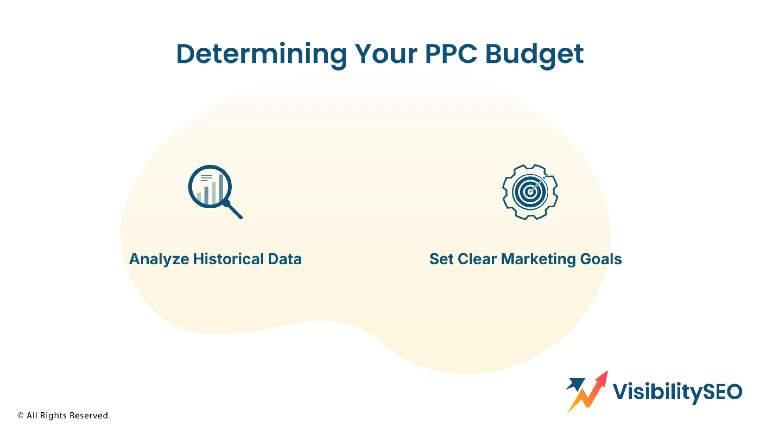
Figuring out your PPC budget takes some thinking and planning. You can’t just guess how much budget to spend. Start by looking at your past campaigns, average sale value, and profit margins. Then, think about your business objectives; are you aiming for lead generation, brand awareness, or direct sales? These goals will affect your budget decisions. Always connect your PPC goals to your available ad budget and revenue growth targets.
Analyze Historical Data
Looking at historical data helps you make better choices. You can see how past campaigns performed, what worked, and what didn’t. This includes average CPC, click through rate, Google Ads conversion tracking data, and website conversion rate. These numbers help you avoid wasted budget and improve campaign performance. Use Google Analytics or other tools to collect and study this data. It’s the first step of the optimization process for your PPC advertising campaign.
- Brand Awareness: If your goal is brand awareness, your focus should be on visibility. You want more people to see your ads, even if they don’t click right away. That means using a budget based more on impressions than conversions. High-volume ad placement and keyword optimization are key. Choose relevant keywords with a low average CPC to stretch your PPC spend. This type of campaign helps build trust over time.
- Lead Generation: For lead generation, you want people to click and take action, like filling out a form. Your PPC ads should use strong ad copy and link to high-quality landing pages. Look at past conversion rate data to plan how much to spend. Focus on performance data from search engines like Google and Bing Ads. A solid lead generation campaign can support long-term business growth.
- Direct Sales: If you want direct sales, your ads need to convert right away. This is where landing page performance really matters. You’ll want to calculate how much each click is worth based on your average sale value. A strong PPC advertising campaign with a tight PPC budget effectively spent can lead to more profit. Keep an eye on your return on ad spend to know if your ads are paying off.

Set Clear Marketing Goals
You need clear marketing goals to guide your PPC campaign budgeting. These goals help you focus your ad spend and improve campaign success. Without them, it’s easy to overspend or miss your targets. Connect your PPC goals with your business goals. Are you trying to grow your customer base or increase sales? Having clear goals helps with better budget management.
- Brand Awareness: If brand awareness is your goal, aim for more reach. Your PPC advertising should show up in more places. Use ad scheduling to make sure your ads appear when people are active. Spread your daily budget across multiple campaigns to hit more audiences. It’s not about clicks; it’s about being seen. Google Ads and Bing Ads both offer ways to track impressions.
- Lead Generation: For lead generation, focus your ad budget on actions. Use Google Ads conversion tracking to see which keywords drive leads. Make your landing pages strong and easy to navigate. Use ad copy that clearly tells people what to do. Don’t just guess. Let past performance data guide your choices.
- Direct Sales: Direct sales mean quick action. You want your PPC ads to bring buyers right to your site. Your average CPC matters, but so does the website conversion rate. Track your sales, cost per conversion, and adjust your monthly budget as needed. Direct sales campaigns need tight keyword research and great landing pages.
- Customer Engagement: Customer engagement is about keeping people interested. Use your PPC campaigns to share new updates, blog posts, or offers. Choose relevant keywords and test new keywords often. PPC advertising can help you stay in front of your customers. The better your ad copy and ad placement, the more people will interact.
4 Steps to Determine Your PPC Budget
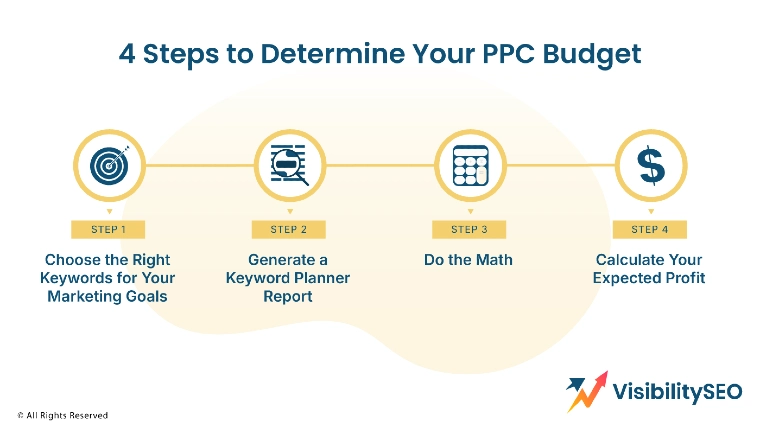
Figuring out your PPC budget doesn’t have to be hard. Follow these four steps to stay on track and get better results from your advertising efforts. This process helps prevent overspending while improving campaign efficiency. It’s all about making smart, data-informed decisions. With the right strategy, you can boost performance and maximize your return on ad spend.
Step 1: Choose the Right Keywords for Your Marketing Goals
Start with keyword research. Use tools like Google Ads keyword planner to find relevant keywords. Focus on keywords that match your marketing objectives. Don’t just go for the most popular terms—go for ones that support your PPC goals. Keyword performance plays a huge role in budget allocation. High-intent keywords may cost more but bring better results. Consider long-tail keywords for niche targeting and lower CPCs. Align keyword selection with the user intent behind search queries.
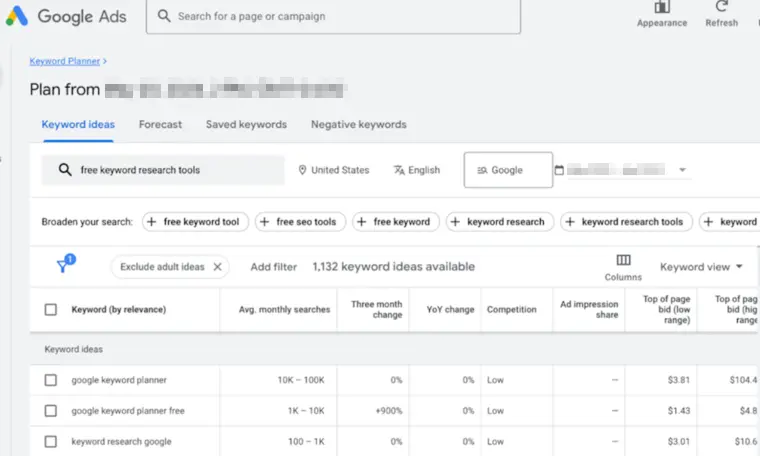
Step 2: Generate a Keyword Planner Report
Once you have your keywords, generate a keyword planner report. This gives you data on search volume, average CPC, and competition. You can also spot new keywords to try. This report helps you understand what your future ad spend might look like. It’s also a valuable tool for predicting potential ROI. Regularly updating this report helps you adapt to market trends. Make it a routine part of your PPC campaign planning.

Step 3: Do the Math
Now, calculate your potential costs. Multiply your expected clicks by the average CPC. Add any management fees if you use an agency. Don’t forget to factor in your total budget and profit margins. Include estimates for A/B testing and ad variations. Set limits to avoid overspending during early testing. A well-calculated budget gives you financial control and realistic performance expectations.

Step 4: Calculate Your Expected Profit
To know if your budget works, figure out your expected profit. Take your average sale value and website conversion rate to estimate earnings. Subtract your total PPC spend. If you’re not happy with the numbers, go back and adjust. This step helps tie your ad spend to business growth. Recalculate periodically as performance data evolves. A profitable PPC campaign is one that balances cost with consistent, measurable results.
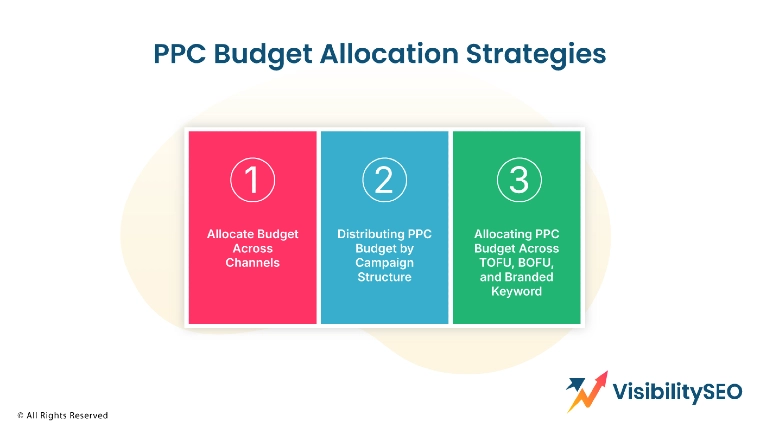
3 PPC Budget Allocation Strategies
There are smart ways to use your PPC budget. By using different strategies, you can get more from your ad budget. Below are three strong ways to guide your budget allocation decisions. It’s not about spending more. It’s about spending smarter. Small changes in strategy can make a big difference in a campaign’s success.
1. Allocate Budget Across Channels
Using multiple platforms can help you reach different people. Split your PPC budget between Google Ads, Bing Ads, and maybe even social platforms. Each platform may have different CPC rates, ad placement options, and audience behavior. This approach lets you test and find what works best.
Budget Distribution Strategy
When it comes to spending, it helps to follow a plan. Your total budget should be divided carefully based on your PPC goals. Start with what you know works, then test new things in smaller amounts.
- High-performance allocation: Put more money into what works. If one campaign is getting a higher return on ad spend, boost its budget. Check Google Analytics and Google Ads conversion tracking to spot high performers.
- Testing and exploration: Always leave some room in your ad budget for testing. Try new keywords or ad variations. Use manual bidding or automated bidding strategies to see what gets the best results.
- Niche platforms: Sometimes, smaller platforms perform better for specific audiences. These niche channels might have a lower average CPC and give better value. It’s worth testing to find hidden wins.
2. Distributing PPC Budget by Campaign Structure
How your campaigns are set up matters. Break your PPC advertising into smaller parts so each goal has a clear focus.
- Strategic objective segmentation: Divide your ad spend based on the purpose—brand awareness, lead generation, or direct sales. Each one needs a different approach to keyword optimization and landing pages.
- Product or service line segmentation: If you sell more than one product or service, build separate PPC campaigns for each. That way, your ad copy and budget match what you’re promoting.
- Geographic targeting: Some areas might bring better results. Use geographic targeting to send your PPC ads to the most profitable places. Adjust your daily budget based on where your customers are.
3. Allocating PPC Budget Across TOFU, BOFU, and Branded Keyword
Each part of the marketing funnel has different needs. Your PPC spend should reflect that.
- Branded keywords: These keywords include your business name. They usually cost less and convert better. Use branded ads to protect your brand and guide people straight to you.
- TOFU keywords: Top of funnel (TOFU) keywords reach new people. They may not buy right away, but they start the journey. Use TOFU ads for education and awareness.
- BOFU keywords: Bottom of funnel (BOFU) keywords focus on ready buyers. These users are close to converting. These campaigns need precise targeting and high-performing landing pages.
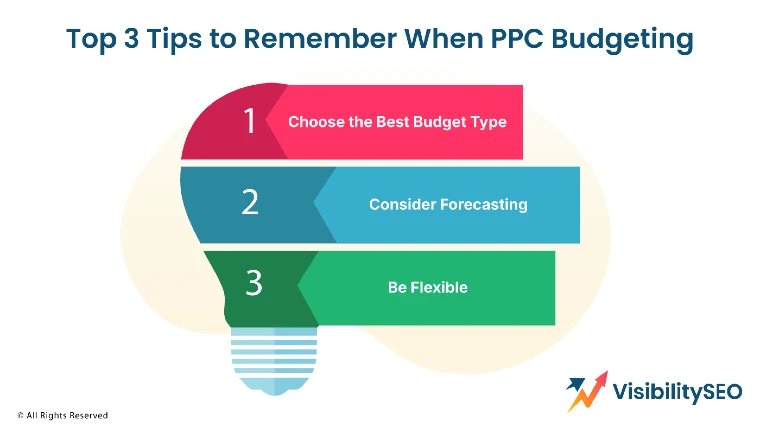
Top 3 Tips to Remember When PPC Budgeting
Good budgeting takes focus. These three tips can help you make smart choices and get the most from your PPC performance.
1. Choose the Best Budget Type
Your budget type matters. Do you want a daily budget or a monthly budget? A daily budget helps control spending, but needs more frequent checks. A monthly budget gives more room for long-term testing. Pick the one that fits your budget management style. Also, think about how much of your budget you can commit to regularly. If your cash flow changes often, a flexible daily budget might work better. But if you have a set amount for paid advertising each month, a monthly budget may be more stable. Match your style with your needs.
2. Consider Forecasting
Use performance data to forecast. Look at your click through rate, cost per conversion, and past campaigns. Planning ahead with these numbers can help avoid surprises and wasted budget. Forecasting also allows you to spot trends. Are certain months better for conversions? Is your average CPC going up? Knowing these patterns helps you prepare and change your budget based on expected changes. It’s like having a roadmap before you hit the gas.
3. Be Flexible
The digital advertising world changes fast. So should your PPC budget. If something isn’t working, move money elsewhere. Always leave room to adjust based on keyword performance and ad campaign results. Flexibility means you can take advantage of new trends or fix problems quickly. Maybe a new keyword starts performing well or a product launch changes your PPC goals. Staying flexible keeps your campaigns strong and ready for anything.
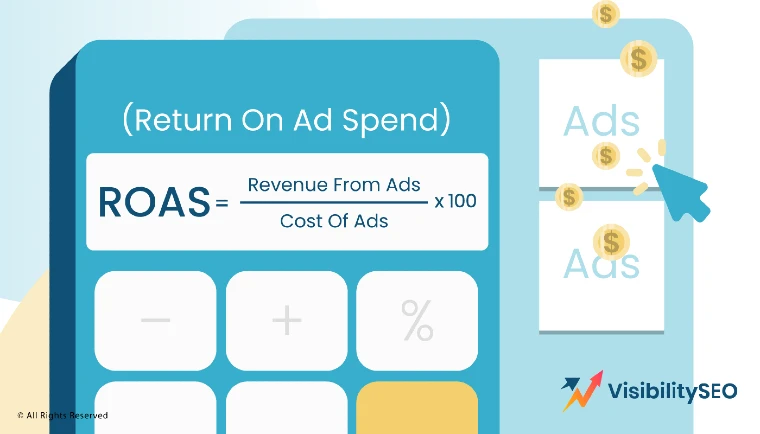
How to Generate a Higher ROAS from Your PPC Budget?
Optimize Ad Targeting: Use Google Ads and Bing Ads to target the right people. Narrow your audience by interests, age, or location. Better targeting leads to a higher click-through rate and better use of your PPC spend.
- Improve Ad Quality and Relevance: Make sure your ad copy matches what people search for. Include relevant keywords. Ads that match the search intent get more clicks and clicks that convert.
- Enhance Landing Page Experience: Your landing pages should load fast and be easy to use. Keep your message clear. Strong landing pages improve your website conversion rate and make your ad spend go further.
- Utilize Automated Bidding Strategies: Use automated bidding strategies to adjust your bids in real time. This saves time and can help you get better ad placement for less money.
- Continuously Test and Optimize: Try different ad variations. Change up your headlines or images. Run A/B tests. Small changes can bring big improvements.
- Real-Time Monitoring and Campaign Adjustments: Watch your campaign performance closely. If something drops, act fast. Use key metrics from Google Analytics to stay ahead. Good budget management means quick action.

Start Building Your PPC Budget Today
Don’t wait. The sooner you start planning your PPC budget, the better your ad results will be. Use your business goals, performance data, and smart strategies to build a plan that works. Whether you’re focusing on lead generation, direct sales, or brand awareness, a well-planned budget helps you grow your business and avoid wasted ad spend.
FAQs
What factors influence the setting of a PPC budget?
Many things affect your PPC budget, like your business goals, industry competition, and cost per click for your keywords. Other factors include your website conversion rate, past campaign data, and the platforms you use. If you want fast results, you may need a higher budget. But even with a small budget, clear goals and smart planning can help.
How to calculate a PPC daily budget for your business?
Start with your total monthly budget. Divide it by the number of days you want to run your ads. Then check the average CPC for your main keywords. Use that number to estimate how many clicks you’ll get each day. This helps you match your daily budget to your campaign goals without overspending.
How do I plan a successful PPC campaign?
Start by setting clear PPC goals. Do keyword research and write strong ad copy. Build great landing pages. Use tools like Google Ads conversion tracking and Google Analytics to measure results. Keep testing and adjusting. A successful PPC campaign needs time, effort, and ongoing changes to improve.
How often should I review and adjust my PPC budget?
You should review your PPC budget at least once a month. But if you’re running high-volume campaigns, check more often. Watch for signs like high ad spend with low conversions. Adjust your PPC spend based on keyword performance, conversion rate, and campaign success to get better results.

- SEO Consultant vs SEO Agency – What is the Difference? - June 25, 2026
- FAQ Schema: A Simple SEO Trick for Better Visibility - December 20, 2025
- What Is YMYL and Why It Matters for SEO? - December 16, 2025